
Spotlight: Rochellie Cortés-Martínez
#NVTW2026
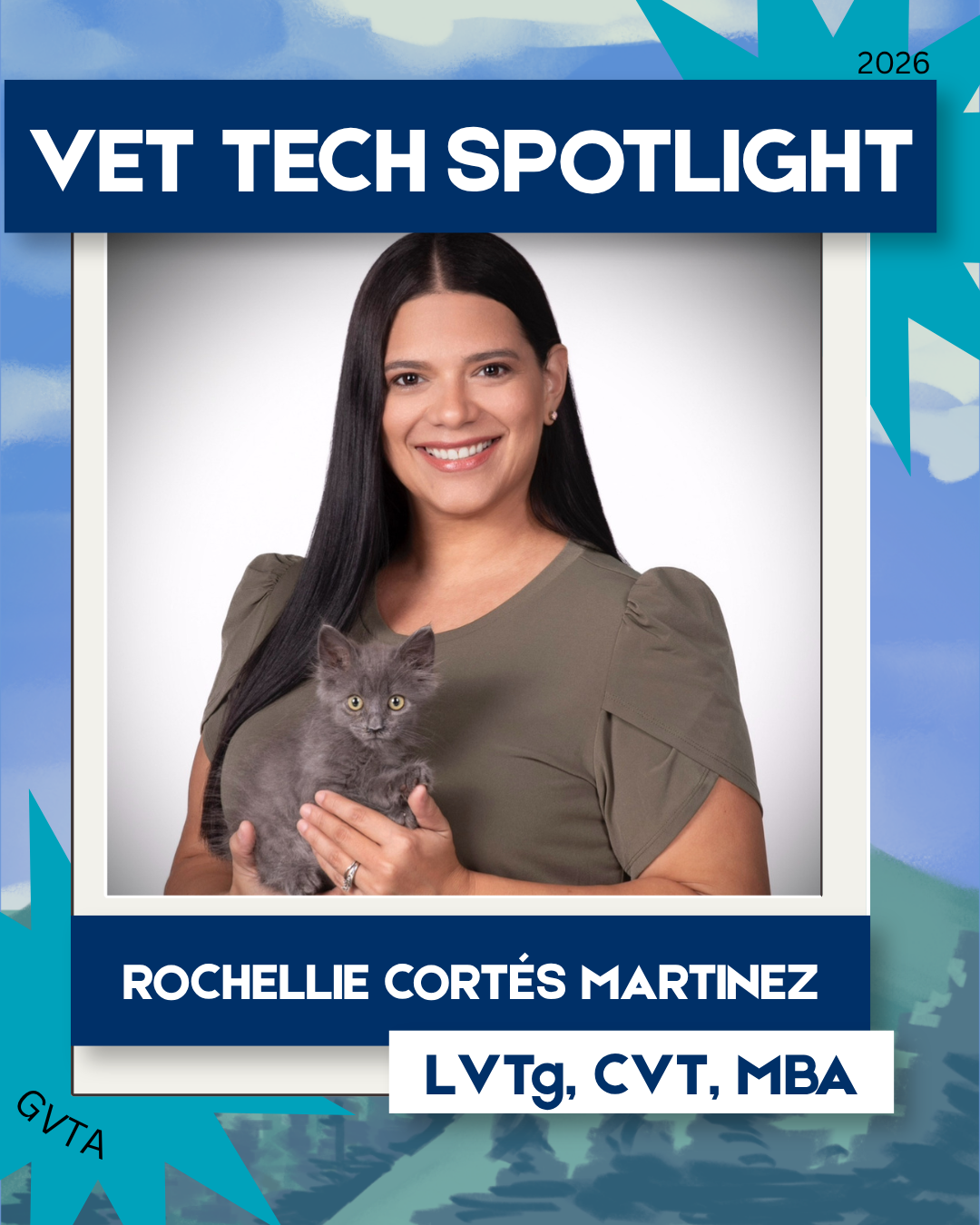
On this marvelous Monday of Vet Tech Week, we are SO excited to spotlight an incredible LVT in our industry, and a driving force for licensed veterinary technician empowerment in Puerto Rico - Rochellie Cortés-Martínez, LVTg, CVT, MBA. Puerto Rico, Georgia, and Florida are united as NAVTA's district IV (https://navta.net/volunteer-opportunities/district-representative-committee/) - and the work Rochellie spearheads in PR affects us all ❤️🤍💙 Rochellie has entered the chat:
Veterinary nursing in Puerto Rico is grounded in professional responsibility, adaptability, and a strong sense of community, with licensed veterinary technicians and technologists playing a vital role in animal health, access to care, and the advancement of the profession. Although current legislation provides title protection, the absence of a formal local professional association has limited the ability to consistently advance and implement that legislation, placing the responsibility for education, advocacy, and leadership on individuals. It was within this gap that my work began to take form.
I graduated from the veterinary technology bachelor’s program at the University of Puerto Rico Medical Sciences Campus, the only AVMA-accredited veterinary technology program at the time. After several years working in local clinics and AAHA-accredited hospitals in Puerto Rico, I developed a deep understanding of both the strengths and limitations of our professional landscape. When I transitioned into academia, my focus extended well beyond graduating CVTEA-accredited veterinary technicians. I felt a responsibility to ensure that graduates were not only clinically prepared but also supported as they entered a profession still working toward full recognition and utilization. For me, the role of a program director does not end at graduation. Preparing competent veterinary technicians is essential, but building pathways for continued growth, representation, and leadership is equally important.
As my career progressed, I completed my master’s degree and gained experience outside of veterinary medicine through corporate and international roles. These experiences expanded my perspective beyond clinical and academic environments and strengthened my leadership, organizational, and strategic skills. Stepping outside of veterinary medicine allowed me to return with a broader vision of how professions grow, how systems change, and how leadership can be developed intentionally rather than reactively.
Leadership itself was not new to me. From my education in a military high school to later professional roles, leadership had always been present, though not always fully embraced. Receiving the NAVTA Veterinary Technician of the Year Award became a pivotal moment, not simply as personal recognition, but as confirmation of the importance of professional organizations and collective visibility. That experience reinforced a central belief that progress in this profession cannot happen in isolation. Recognition, support, and advocacy require strong professional communities working together at both local and national levels.
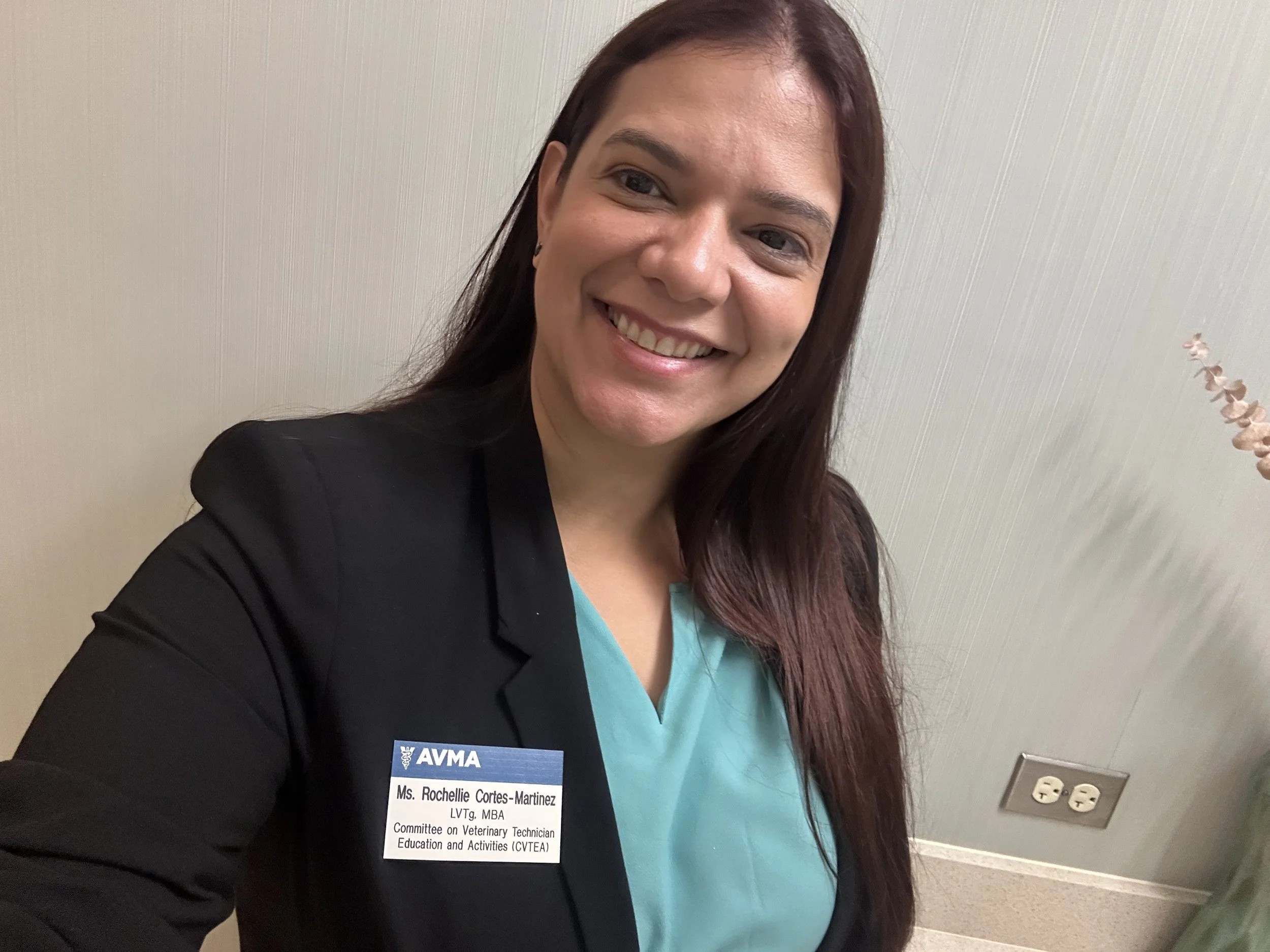
Because our profession lacks the organizational structure needed to move its current legislation forward, national engagement became a strategic necessity rather than an ambition. Through involvement with NAVTA, AVMA, AVTE, AAVSB, and national committees focused on examination standards, my work has centered on ensuring that Puerto Rico is represented in both local and national conversations. This participation has helped build the relationships and institutional understanding needed to support long-term progress for the profession on the island.
Within academia, my primary focus has become SCNAVTA. Student leaders represent the future of the veterinary technician profession, and investing in their development is one of the most effective ways to create sustainable change. Identifying students with leadership potential, mentoring them through their academic journey, and continuing that support beyond graduation has been a central priority of my work. That commitment was recognized when one of our programs’ SCNAVTA chapters was named the 2025 Veterinary Technician Chapter of the Year, becoming the first program in Puerto Rico to receive this distinction.
Another significant milestone has been veterinary technicians in Puerto Rico gaining a seat at the table in governmental discussions for the first time. These forums have allowed decision makers to better understand that veterinary medicine extends beyond veterinarians alone. Puerto Rico has highly trained, licensed veterinary technicians and technologists who, when fully utilized and supported by appropriate legislation, can play a critical role in expanding access to care. For an island facing persistent challenges related to stray animals and abandonment, effective utilization of veterinary technicians is not optional; it is essential.
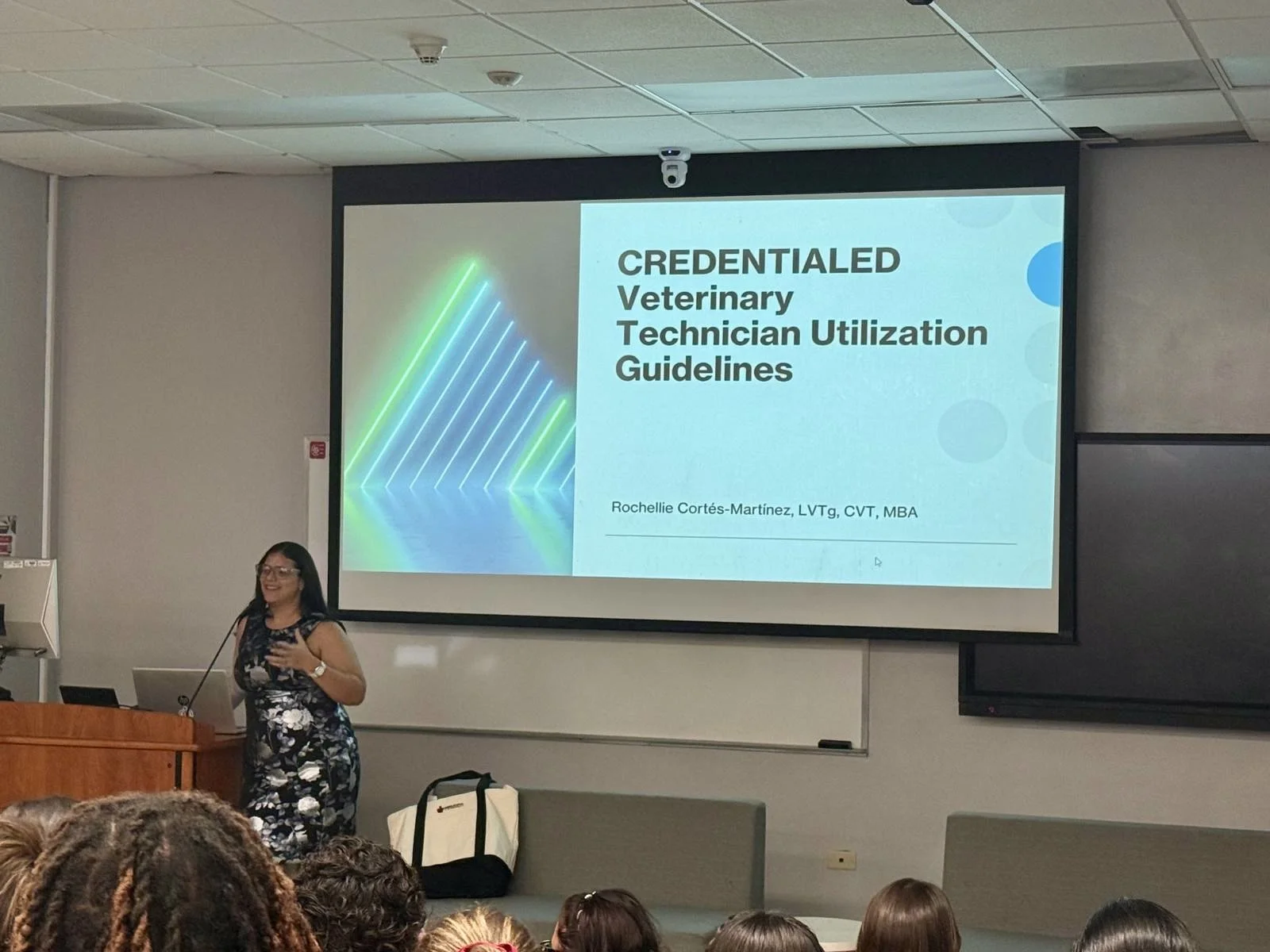
I proudly serve at the School of Veterinary Medicine at Universidad Ana G. Méndez, Gurabo Campus, where meaningful change is being built through collaboration between veterinary medicine and veterinary technology education. The structure and leadership of the DVM program have enabled the intentional integration of veterinary technician utilization into veterinary medical training. Doctoral-level faculty and deans have recognized the importance of this collaboration and created space for these conversations within the curriculum. Being invited to lecture veterinary medicine students on veterinary technician utilization guidelines is a responsibility I take seriously. Educating future veterinarians alongside veterinary technicians ensures that both professions enter practice aligned, collaborative, and prepared to work at the top of their respective scopes.
My connection to the state of Georgia comes through NAVTA District IV, which represents Georgia, Florida, and Puerto Rico. GVTA’s willingness to highlight work beyond state borders reflects the value of inclusive leadership and collective advocacy within our profession.
To veterinary technicians who want to see change and are willing to advocate for it, leadership is not a title; it is a choice. Progress requires participation, visibility, and collaboration. Be present in professional spaces. Be vocal in conversations that shape policy and practice. Support one another locally and nationally. This profession advances when we choose courage over silence.
Representation matters.
